BYD Shark 6 Plug in Hybrid Electric Vehicle - Research, Testing and Everything you need to know [Part 2]
Published on 26th October 2025 by Simon Fearby

This post has been broken down into multiple pages due to it's size.
Chapter: [Part 1], [Part 2], [Part 3].
Safety Systems and Technology Features
The BYD Shark 6 is a five-star ANCAP UTE (tested 2025) with strong scores for Adult (85%), Child (87%) and Safety Assist (86%) protection.:
Passive Safety- 7 SRS airbags: dual front, side, full-length curtain and a centre airbag between the front seats.
- ISOFIX child-seat mounts and top-tether points, plus mechanical child safety locks.
- Rigid body structure designed around BYD’s Blade battery chassis to protect both cabin and pack in a crash.
The Shark 6 packs a full modern ADAS suite as standard:
- Autonomous Emergency Braking (AEB) with vehicle, pedestrian, cyclist and motorcycle detection, active from low urban speeds up to highway speeds.}
- Adaptive Cruise Control (ACC) and Intelligent / Adaptive Cruise (ICC) for speed and distance keeping in traffic.
- Lane support:
- Lane Departure Warning (LDW)
- Lane Departure Prevention (LDP)
- Emergency Lane Keeping Assist (ELKA)
- Lane Keep Assist (LKA)
- Blind Spot Detection (BSD) with lane-change warnings and Door Open Warning (DOW).
- Front & Rear Cross-Traffic Alert and Braking (FCTA/FCTB, RCTA/RCTB) for carparks and backing out of driveways.
- Rear Collision Warning (RCW) and Trailer Stability Control (TSM) for safer towing.
- Traffic Sign Recognition (TSR) with Intelligent Speed Limit Info & Control (ISLI/ISLC) to read signs and match speed.
- Driver fatigue / attention monitoring and child presence detection to help prevent distraction- and heat-related incidents.
- Electronic stability control (VDC), hill-hold, hill descent control (HDC), brake assist (HBA), auto-hold and electronic brakeforce distribution (EBD).
- Front and rear parking sensors plus a 360°/surround-view camera system for tight manoeuvres.
Technology & Convenience Features
On the tech front, Shark 6 is closer to a modern EV than an old-school UTE.
Powertrain & Hybrid Tech- DMO plug-in hybrid system: 1.5-litre turbo petrol engine plus dual electric motors (front & rear) for e-AWD.
- Combined system output around 320 kW, 0–100 km/h in ~5.7 seconds.
- ~29.6 kWh BYD Blade LFP battery integrated into the chassis, DC fast-charging up to ~55 kW.
- Claimed ~800 km combined range per tank when using both battery and fuel.
- 15.6-inch central infotainment screen that can rotate between portrait and landscape.
- 10.25-inch digital driver display plus windscreen head-up display (W-HUD).
- Wireless Apple CarPlay / Android Auto–style smartphone mirroring and wireless phone charging (with cooling).
- Dynaudio premium audio system (12-speaker in some markets).
- Keyless entry, push-button start and a full suite of connected-car functions (over-the-air updates depend on market).
Short version for your post: Shark 6 brings EV-level driver assistance and infotainment into the ute segment – 7 airbags, full AEB/LKA/BSD/Cross-Traffic suite, driver-monitoring and 360° cameras on the safety side, plus hybrid e-AWD, rotating 15.6″ screen, HUD and premium audio on the tech side.
Our Goals and Assumptions
- 100% Day to Day Electric only driving?
- Recharge at night with off peak renewable grid power
- Bunnings, tip and trips with the dogs
- Light to Medium Off Roading
Technical Stuff
- Blade Battery (LFP): ~29.6 kWh lithium iron phosphate pack using BYD’s ultra-safe Blade format with excellent thermal stability and long cycle life.
- Silicon-Carbide (SiC) Power Modules: The inverter uses SiC MOSFET tech for higher switching efficiency and lower heat loss compared to silicon IGBTs, improving drivetrain efficiency by ~5–10% in real-world hybrid systems.
- Dual Permanent-Magnet Motors: High-efficiency PM motors front + rear. Typical PM motor efficiency for BYD’s units is ~94–96% peak (varies by load).
- 3.3 kW Vehicle-to-Load (V2L): Can power tools, appliances, camping gear or charge other devices via onboard AC output.
- OTA Firmware Updates: BYD pushes updates to infotainment, energy management, ADAS calibration and UI improvements over the air.
- Integrated 360° Camera + Transparent Chassis View: Uses stitched camera feeds to show wheels, obstacles and off-road terrain.
- DMO Hybrid Architecture: BYD’s dedicated off-road/utility hybrid platform combining a 1.5L turbo petrol engine with dual electric motors for e-AWD.
- Chassis-Integrated Battery: Blade pack is mounted inside the ladder frame to enhance torsional rigidity and crash protection.
- High-Voltage 400V System: Uses BYD’s 400-volt bus for balanced cost, heat management and charging performance.
- 55 kW DC Fast Charging: Capable of ~30–35 minutes 30→80% under ideal conditions.
- Water-Cooled Electric Motors: Independent cooling loops for better sustained power delivery under towing or off-road loads.
- High-Output Hybrid Power: Combined ~320 kW system output with torque delivered instantly from the dual motors for rapid launches (~5.7 s 0–100 km/h).
- Predictive Energy Management: ECU blends engine + motors based on elevation, throttle prediction and battery state to minimise fuel use.
- 15.6-Inch Rotating Touchscreen: BYD’s signature rotatable display (landscape or portrait) built on an Android-based OS.
- 10.25-Inch Digital Driver Display: High-resolution cluster with hybrid-system flow, real-time torque distribution and energy stats.
- Wireless CarPlay + Android Auto: Full smartphone integration with wireless connectivity and OTA compatibility depending on region.
- Dynaudio Audio System: Premium multi-speaker setup (up to 12 speakers) engineered for the Shark’s cabin acoustics.
- Advanced ADAS Processor: Dedicated safety SoC running the AEB, lane-keeping, traffic-sign recognition and 360° vision pipeline.
- Multi-Zone Thermal Management: Separate cooling circuits for battery, motors, inverter, cabin and engine for maximum efficiency.
- Torque-Vectoring AWD Logic: Software dynamically shifts front/rear torque for traction, stability and off-road climbing performance.
Purchasing Experience
My Wife is buying her BYD Shark 6 from https://woodleys.com.au/. Thanks to Brendan Murray, Ryan Bevan and David Richards who hooked us up with a test drive and are helping us with the purchase.
Setup and Configuration
Initial Setup and Vehicle Configuration
If you plan on using your phone as a key do set this up. You do not need to to this as the standard car key is good enough.
Just Picked Up Your BYD? Watch This First! (not Shark focused but a good start)
BYD Shark 6 Tutorial - All Physical Buttons Explained | Centre Console, Dashboard, Steering Wheel
BYD Shark 6 Handover/Walkthrough From Ebbett
Connecting the BYD App and Cloud Services
Connecting the app is a bit hit and miss
Connecting the car to Wifi was a challenge, it kept reporting no successful connection (but it was connected)
Setting Up Charging at Home and on the Road
How to Charge the BYD Shark | Charging Specs, Speed, Range and Options
On a recent Camping trip we drove from Scone (200 meters above sea level) NSW along the Barrington Tops Forest Road (1,500 meters above sea level) then down to Glouster (100 meters above sea level).
Before we left Scone we filled the car with Petrol (Last Petrol for 400km and started climbing up the Barrington Ranges.
This journey would have been impossible in full Electric Car.
The Shark climbed the hill with ease.

-31.9188931,151.3358074
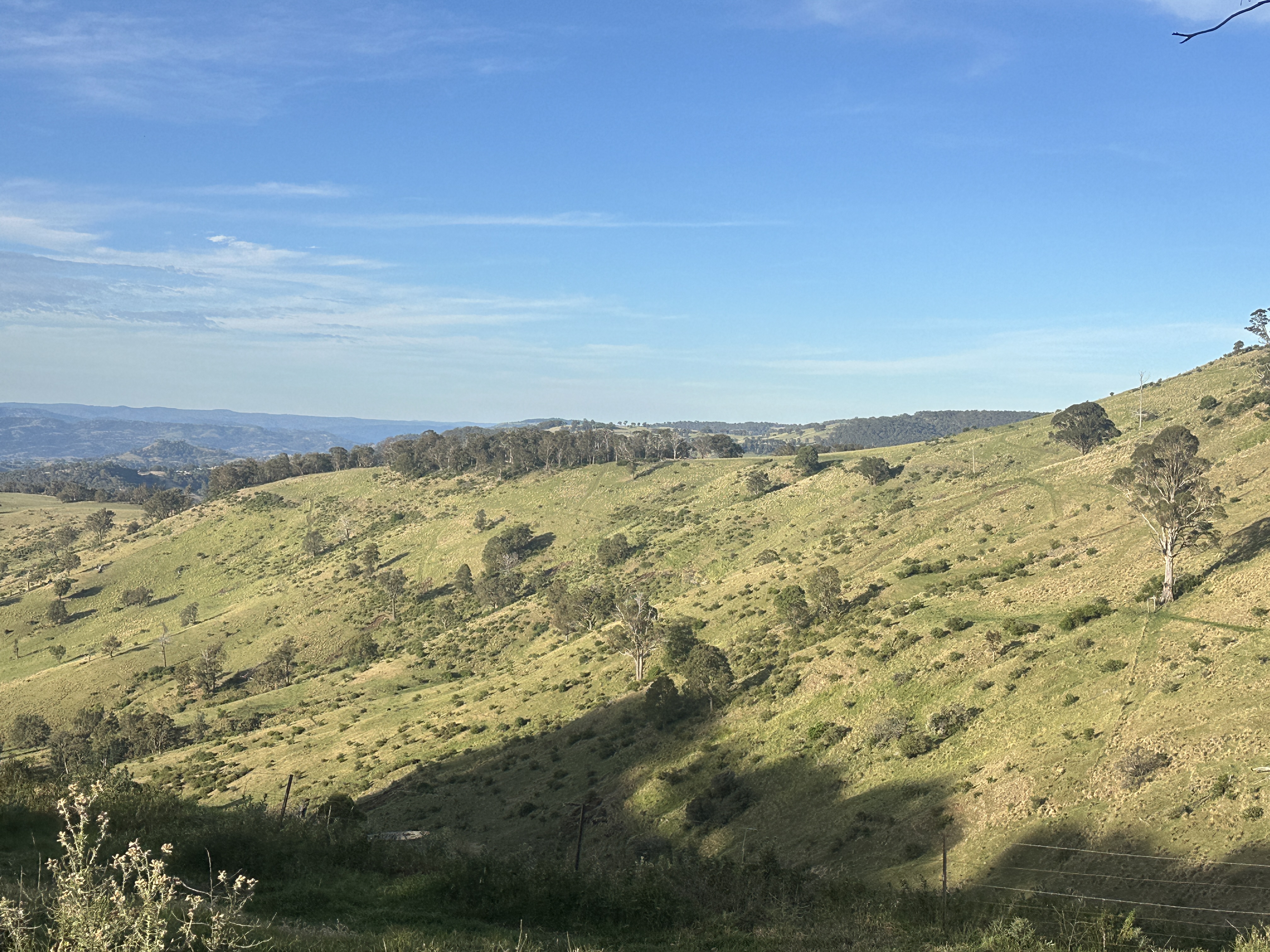
-31.9260751,151.3418621
On flat roads the engine is more than capable of charging the battery to the desired battery level and moving the car. On downhill sections the Shark will happily regenerate power and fill the battery if the charge level is set high enough. On Up steep hill sections the engine will run a little faster but movement is very brisk
Jump ahead to read about charging.
Customizing Driver Profiles and Preferences
I wish there was seperate driver profiles like a Tesla that move the seats etc per driver.
Setting the navigation screen instead of a wallpaper is a must.
There is no individual driver profiles like in a Tesla. I hope they add this in an OTA update.
Enabling Auto-Lock and Safety Features
I wish there was auto start on entry.
I wish there was auto shutdown on exit.
Pressing a button to start the car will take some time to get used to.
We had to learn how to disable the safety chimes (Tip: Swipe down from the top to disable).
Public Chargers
We will pre sign up for each Public Charging provider in Australia (Eastern States) that we can find and order FOBs or TAAP cards to add to the car to speed up any public charging.
Table below is in the order of how convenient they have been to us driving across Australia in a BEV
| EV Charger Provider | Average Location of Chargers (East Coast) | Description (Scale, Power, Renewable, Activation) | Signup / Info URL |
|---|---|---|---|
Tesla (Supercharger & Destination)
 |
Metro, highway and key regional hubs along major east‑coast routes | Supercharger network with ~100+ locations nationally, many along the Brisbane–Sydney–Canberra–Melbourne corridor and other east‑coast routes. Sites typically offer 72–250 kW DC, suitable for rapid highway top‑ups. Destination chargers (AC 7–22 kW) are located at hotels, shopping centres and tourist destinations. Power is from the grid (renewables share depends on retailer/state). Activation is via the Tesla app or in‑car “plug and charge”; many sites are now open to non‑Tesla EVs that pay via the Tesla app. | https://www.tesla.com/en_au/supercharger |
Evie Networks
 |
Metro and highway; strong presence along east‑coast corridors | National fast‑charging network with 300+ locations across Australia, heavily concentrated along east‑coast highways and in metro shopping centres and retail hubs. Uses Tritium and Kempower DC hardware with typical power levels from 50 kW up to 350 kW. Some sites are backed by renewable energy through government‑supported programs. Sessions are activated via the Evie app or RFID “Evie Pass”, with support for credit/debit cards and mobile wallets in‑app. | https://evie.com.au/ |
Ampol AmpCharge
 |
Ampol service stations – metro and highway across the east coast | Network of fast‑charging sites at Ampol service stations and key destinations. Many east‑coast sites offer 75–150 kW DC chargers, with some higher‑power units being rolled out (up to ~300 kW). Locations are geared for highway and urban refuelling‑style stops, often with canopy, lighting and amenities. Power is grid electricity; some sites are linked to renewable‑backed infrastructure programs. Drivers use the Ampol app (AmpCharge) to locate chargers, start/stop sessions and pay. | https://ampcharge.ampol.com.au/ |
NRMA Electric
 |
Regional and highway focus in NSW/ACT/QLD with some metro sites | The largest regional fast‑charging network in Australia, originally focused on NSW but expanding nationally via the federal “Driving the Nation” program. Chargers are typically 50–150 kW DC placed ~150 km apart on major highways to connect regional towns and capitals. Power is grid‑supplied, with many sites delivered via government programs targeting lower‑emission transport. Access is generally via the Chargefox/NRMA app; NRMA members often receive discounted rates. | https://www.mynrma.com.au/electric-vehicles/charging |
Exploren
 |
Metro and regional; nationwide coverage including east‑coast cities and towns | Software‑driven network that unifies chargers operated by businesses and governments across Australia and New Zealand. Mix of AC (7–22 kW) and DC fast chargers (typically 25–350 kW) depending on host. Renewable content depends on each site’s retailer/contract. Drivers locate and start sessions via the Exploren app or partner white‑label apps (scan QR or select charger ID) with card‑on‑file billing. | https://exploren.com.au/ |
Chargefox
 |
Metro, highway and regional; dense on the east‑coast spine | One of Australia’s largest public charging platforms with hundreds of sites, including ultra‑rapid DC chargers (150–350 kW) on key corridors like Brisbane–Sydney–Canberra–Melbourne–Adelaide. Many ultra‑rapid sites were co‑funded by ARENA and are backed by renewable electricity contracts. Also manages many 50 kW DC and 7–22 kW AC units for partners (NRMA, RACV, councils, shopping centres). Sessions are started and paid via the Chargefox app; some sites also support RFID or tap‑and‑go. | https://www.chargefox.com/ |
Everty
 |
Metro and regional “destination” sites (car parks, buildings, workplaces) | Everty is primarily a software and management platform used by site owners (councils, car parks, apartment blocks, workplaces) rather than a branded highway network. Chargers on the Everty platform are usually AC 7–22 kW, with some DC fast chargers up to 350 kW depending on the host. Energy source (including renewables) varies per site. Drivers use the Everty app or a white‑label portal to find a charger, scan a QR code, start/stop sessions and pay. | https://everty.com.au/ |
bp pulse
 |
bp service stations – metro and highway along the east coast | bp’s public fast‑charging brand, with dozens of sites across Australia and a focus on co‑locating chargers at bp service stations on major routes and in cities. Most public chargers fall in the 50–150 kW DC range, with CCS2 connectors and some CHAdeMO where supported. Energy comes from the grid; renewable component depends on local contracts. Access is via the bp pulse app to find chargers, view live status, start/stop and pay. | https://www.bppulse.com/en-au/public-ev-charging |
EVX
 |
Kerbside in urban/suburban streets – NSW, VIC & SA (many east‑coast LGAs) | Specialises in kerbside pole‑mounted AC chargers aimed at residents without off‑street parking. EVX is deploying at least 250 dual‑port 7–22 kW chargers across multiple councils, many in east‑coast cities and suburbs. All sessions are supplied with 100% renewable electricity purchased from their retailer. Drivers use the EVX app to find a charger, plug in, start/stop and pay under tariffs set with each council/host. | https://evx.tech/ |
JOLT
 |
Inner‑city and suburban kerbside sites in major east‑coast cities | DC fast‑charging network using kerbside and retail‑adjacent chargers in cities such as Sydney, Melbourne and Brisbane. Typical chargers deliver around 25–50 kW DC (varies by unit and vehicle). Business model offers app users a small daily free kWh allowance (e.g. ~7 kWh) before per‑kWh charges apply. Power is from the grid; some sites are linked with renewable procurement. Sessions are controlled via the JOLT app (account, vehicle registration, payment details) with optional AutoCharge type features. | https://joltcharge.com/au/ |
UpCharge (EVUp)
 |
Destination and public sites using EVUp hardware – metro and regional | UpCharge is EVUp’s Australian‑developed OCPP software platform and driver app that manages AC and DC chargers deployed by EVUp and partner venues. Many public chargers are AC 7–22 kW, with some sites offering DC fast charging up to around 25 kW and above, depending on the hardware installed. Venue operators can monitor sessions, set tariffs and track usage; drivers use the UpCharge app to find chargers, start/stop sessions and pay (including tap‑and‑go/contactless options at some sites). Renewable content depends on each venue’s energy retailer. | https://www.evup.com.au/ev-charging-software-platform |
EEVEE Mobility
 |
Global app; works with public and home charging wherever your car is | EEVEE is an app and platform for tracking EV charging sessions and costs; it is not a physical charging network. It connects securely to supported EVs (via OEM APIs) and automatically logs home, workplace and public charging sessions, providing detailed reports and graphs for drivers and fleets. East‑coast Australian drivers can use it to aggregate sessions across Tesla, Chargefox, Evie, NRMA, JOLT and other networks. Charging is still activated via each underlying network’s app or payment system; EEVEE sits on top for analytics and cost tracking. | https://www.eeveemobility.com/ |
BYD Shark 6 Public Charging
Evie Charger
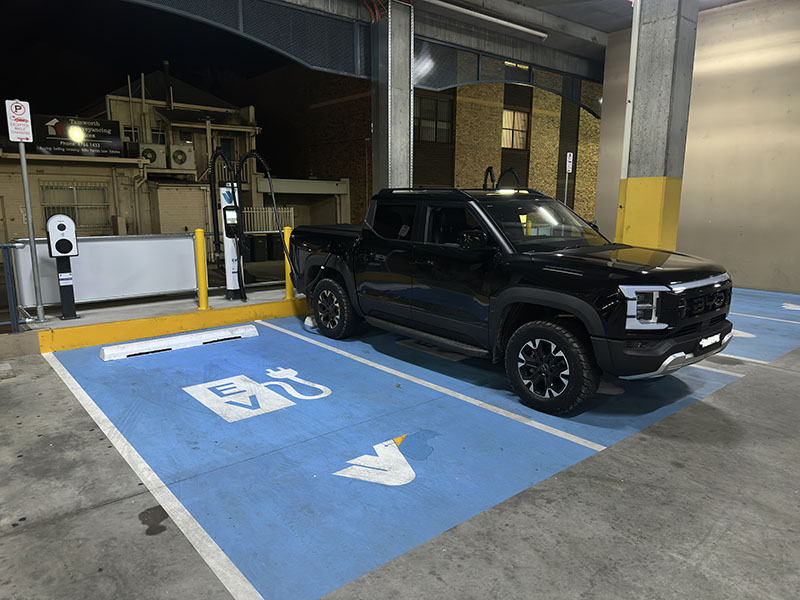
NRMA Charger
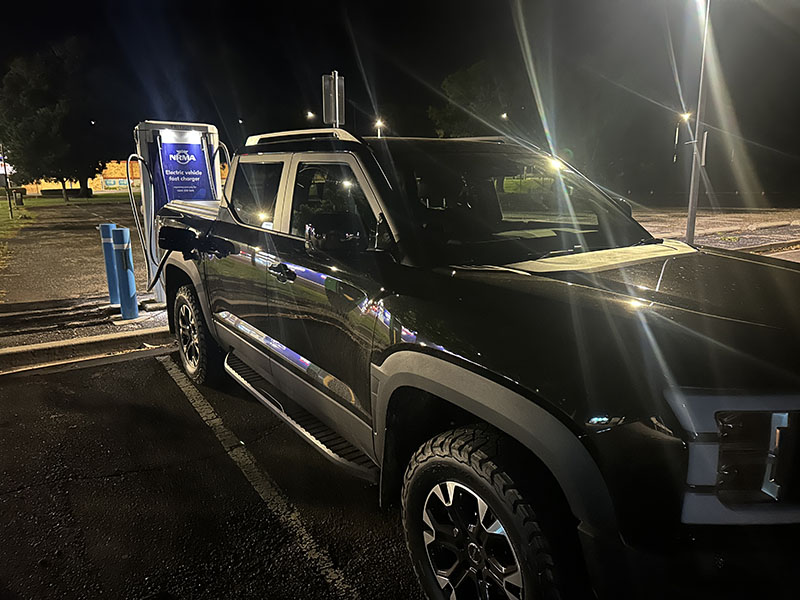
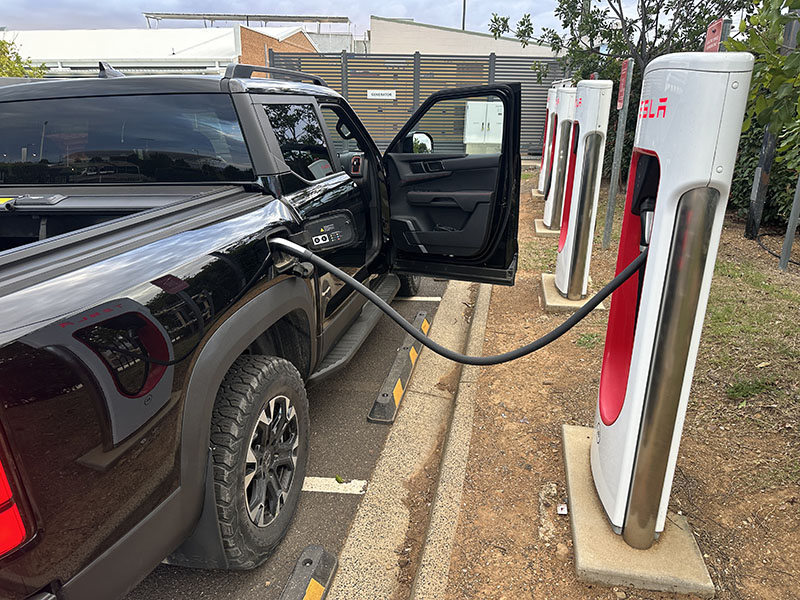
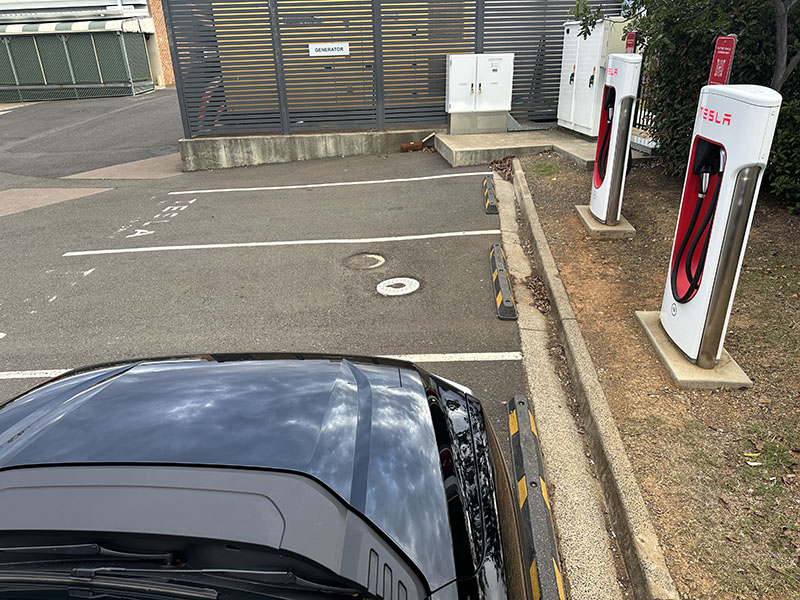
Tesla Charger